3 Painful Cash Flow Mistakes Most Founders Make, Blocking Growth

There is a math to growth. It consists of 3 things. You can get lucky without it, but ignoring it probably brings you nowhere.
Business growth is a compound effect. Some get very lucky incidents like Oprah recommending your product. But that is very rare. You can’t rely on that.
So, you have to grow your business by following this cycle: invest, get more cash, reinvest the larger amount, get a bigger cash flow from the reinvestment, and repeat. This is growth by compounding.
Business growth is exactly like the compound effect of interest. Think of these 2 different strategies.
1. Investing only $100 even when you have $300, investing 2 years from now, and the return is 3% a year.
2. Investing all $300, investing now, and 10% return a year.
The results are very different after 5 years. The former one has a surplus of only $9, and the latter one $183. There is a 20 times difference.
There are 3 mistakes that block the compound effect, putting yourself on a growth plateau or even decline.
The 3 mistakes are:
- Your reinvestment spending is low
- Simply, you are generating too little cash flow from your business
- You’re putting your money into slow-growth areas
Let’s look at each of those.
1. Your reinvestment spending is low

You are generating cash flow from your business, but take the majority to your home or just pile up the cash in the company bank account.
Your company has potential for much faster growth, but by not reinvesting cash. If so, you are killing the opportunity.
There are reasons why you don’t reinvest the cash.
First, you can do without spending cash, so why spend money? It is ridiculous. For example, a software developer who does inbound marketing (organic marketing like SEO, blog, or SNS advertising without spending ad fees). There are very few costs. Revenue is almost equal to your income. No wonder you don’t feel the need to reinvest your cash in something.
The second reason is that you want to accumulate cash to secure business safety. The more cash you have, the safer your business becomes. With piled cash, you can survive even when a recession starts or you fail to sell for 6 months in a row. Also, you need enough cash to cover the monthly payment plus a buffer at least.
But just accumulating without investing will not fuel the growth. So there is a dilemma whether you take safety or growth.
The solution for this situation is to estimate cash flow accurately. By knowing the timing and amount of cash inflows and outflows, you can avoid a cash crunch while maximizing the reinvestment. You don’t need to pile up your cash.
The third reason is that you need to take a lot of cash, because you are a big spender. You get a high salary from your company to buy things. It’s your personal happiness vs the company’s growth. It totally depends on you.
The fourth reason is that you have no place to reinvest cash. So the cash keeps piling up. This is very common. Especially inbound-focused founders often think there is no place to spend their cash. But that is just their imagination. There are many great places to reinvest. You’re just not seriously finding it. The key is to experiment a lot.
Subscription business is a great business model. Because you can get a stable cash inflow every month. It is so predictable that even in a recession, customers still keep paying you. You don’t have to save a pile of cash in your bank account. You can reinvest everything without fearing what happens if you can’t get sales for the next 6 months.
But be careful. You don’t want to invest all or a significant amount if it is your first time. Because the first one is always a failure, at least to me. It is very difficult to recover from investing all in the wrong thing. You confirm that the reinvestment actually brings cash flow, then increase the investment amount gradually.
2. Simply, you are generating too little cash flow from your business

You want to reinvest cash but you can’t, because you are short of cash. That is why many venture businesses seek venture capital funding. But the majority can’t get funded, so you must fund your business with cash flow from your business operation.
There are some reasons why your company can’t get enough cash flow from operations to reinvest.
Ⅰ. Profit margin is low
It’s very difficult to generate cash flow out of a business when you purchase inventory for 99% of the selling price. Increasing profit rate is one of the keys for cash-rich operation.
There are three ways to increase profit margin: ⅰ. Using economies of scale ⅱ. Raising prices ⅲ. Cutting costs
ⅰ. Using economies of scale
Economies of scale is a phenomenon where by selling more, the profit margin increases. To understand this, you have to know variable costs and fixed costs.
Variable costs increase when sales volume increases. On the other hand, fixed costs don’t increase even with sales volume increases, like shop rent. When sales volume increases, fixed costs stay the same, so the profit margin gets higher.
For example, suppose you are operating a retail shop. you purchase an energy drink for $0.8 (that’s a variable cost) and sell it for $2. You rent a shop for $1,000, which is a fixed cost that doesn’t increase when sales volume increases.
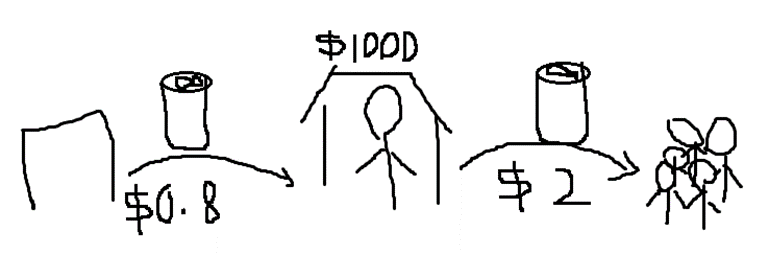
If you sell 1000 cans, your sales are $2,000, the costs are $1,800, the profit $200, the profit margin is 10%. But if you sell 2000 cans, sales $4,000, costs $2,600, profit $1,400, the profit margin gets higher to 35%.
So, if your business costs mainly consist of fixed costs (which include salary costs), increasing sales volume will make your profit rate higher.
ⅱ. Raising prices
You can also increase prices. By providing a great, unique product that solves serious immediate problems, you can raise the price without driving customers away.
This is much easier than cutting costs. Because in many cases, cutting costs leads to reducing sales volume too. Because costs are a necessary sacrifice to earn sales.
ⅲ. Cutting costs
Some costs are pure waste of your money. You can identify it immediately if you are doing bookkeeping by yourself. You get much more cost-sensitive. It’s very difficult to know which is just a waste of cash if you are not seeing your company’s costs.
Ⅱ. More assets, less debt is the worst for cash flow
This is not a typo. More assets and less debt is the worst combination for your cash flow generation. (Although Joe Biden might say, “No, that’s a great asset—What a stupid son of a b***h.”) Here is why: if you have more assets, your cash is stuck in those assets, frozen. It takes time to collect it as cash. Moreover, as you scale your business, you need to put more cash into operations.
For example, you have a shop that sells $100,000, and the inventory is $18,000. If you want to increase sales, you have to have another shop, and you have to have another inventory of $18,000 in the new shop.
Maybe you think you can get another $100,000 in sales, so no problem with only $18,000 spending increase on inventory? Your sales are $100,000, and the cost of sales is $90,000. So your profit is only $10,000 (100,000 – 90,000), but you have to invest $18,000 to purchase new inventory. The cash flow is -$8,000. Also, before the shop starts selling, it requires an initial investment of $18,000 for the inventory purchase.
That is why the more growth you get, the less cash you have. This is why scaling is difficult. To scale your business, you need more cash. Sales increase doesn’t bring more cash, the opposite happens.
This means if you can reduce the assets required for your business, you can free up more cash. For example, if you are selling through a stall instead of a purchased building, your business requires much less cash to expand.
Accounts receivable sometimes account for a big part of your assets. Especially if your customers are big companies. They pay very late, and sometimes you fail to collect the receivable. So, often aiming for enterprises is not a cash flow optimal strategy. But it totally depends on the company’s situation.
More debt, more happiness
About increasing debt. When you start increasing debt, great things happen. It is an accounting ‘debt’, not only borrowed money. It includes customer deposits, deferred revenue, accounts payable, accrued expenses, and accrued employee bonuses.
These are either you got the cash already but you haven’t yet provided service, or you have already consumed the service or product but you haven’t paid for it yet. Those things increase cash flow. That is why when ‘debts’ increase, you get more cash flow.
Maybe you think you will eventually pay, so there is no difference whether you pay it now or later? But there are big differences between those.
For example, think of these 2 patterns.
Pattern A: You have $1,000. You purchase inventory for $1,000, immediately pay it, then you sell it for $1,200 and reinvest in the inventory again. In this case, the growth speed is limited to your seed cash of $1,000.
Pattern B: You purchase inventory, but you don’t pay for it immediately. The amount becomes accounts payable. And you sell it, then retrieve the sales. Then you finally pay for the purchase. In this case, the inventory purchase amount isn’t limited to your seed cash.
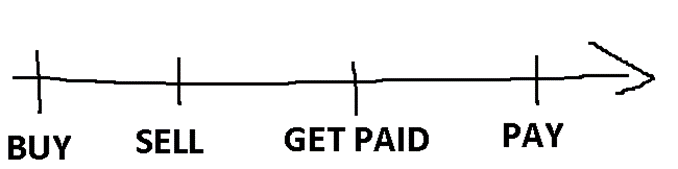
You can purchase $10,000, $100,000, or even $1M — if you can sell them all, and if the seller provides you with that credit. You can see how fast you can scale your business if the situation is like this. Getting VC funding seems ridiculous if you can use this system.
The same thing can be applied to marketing advertisement costs. Delaying payment until after sales cash collection has the same effect.
The more ‘debt’ your business has, the easier it is to scale your business. Normally, when you grow your business, you have less cash as I said. But when those ‘debts’ exceed assets, the opposite thing happens. You can get more cash as you scale your business. This is the golden standard for business scaling. Doesn’t need any kind of funding.
So here are the ideas for increasing each ‘debt’ of your business.
Customer deposits
Famous tools are a point card or a gift card. Customers pay before and use points later, or maybe don’t use them forever. To get more deposits, you can give them incentives like giving 1100 points for $1000 deposit.
When you sell, you can provide points instead of a price discount. This too has the same effect. Customers feel they got a good deal, but your business can reduce the cash impact.
A two-sided platform which has buyers and sellers, like auction sites, has a natural deposits accumulation function. Your seller sells, then your platform doesn’t pay the cash to the seller, but you give them points, so that they can use the points on the platform as a buyer.
Deferred revenue
If you are a subscription business like SaaS, this is a must. Getting more annual payment or multi-year payment customers is key to rich cash flow and your business growth.
In a subscription business, you have to spend CAC (cost per acquisition) to grow your business. If the yearly payment fee is higher than CAC, and the CAC payment is later, your business doesn’t need funding from outside at all. Your annual payment covers all of your CAC. You don’t have to wait for a year till the monthly subscription fee covers all CAC. You can reinvest immediately after you get a customer.
To encourage annual or multi-year payments, you have to offer benefits for those plans. If your sales reps are selling it, you can encourage your sales reps to get an annual payment plan by giving a bigger incentive over the monthly plan.
Accounts payable
When you purchase things from sellers, you can ask them to make the payment term longer. Like changing from paying 1 month later to 6 months later. This is a huge advantage for your cash flow. For example, if you purchase $2,000 a month, paying a month late, the accounts payable would be $2,000, but if you can make the payment 6 months late, the accounts payable increases to $12,000. Because the accounts payable piles up each month for 6 months. You are paying $10,000 less, that is equivalent to making $10,000 cash. It’s almost alchemy.
Not only that, if you can collect sales before paying for the purchase, you can expand your sales without being limited to your cash. Sell first, get paid, then finally pay the suppliers. You can achieve expansion without capital.
This is why the payable payment term is deeply related to the receivable payment term and the inventory turnover period. If you want to know more about it, read this article.
This is accomplished by having purchasing power. Like making a bulk purchase, or providing the seller up-to-date demand data so that sellers can easily predict how much they will buy. Or giving a seller the sole seller privilege. Choosing cash-rich sellers who can make the payment term longer is also important. You can often get a longer payment term by paying a higher price. The optimal length and price balance depends on your business situation.
Accrued expenses
This occurs when you pay costs like salary or advertising fees later than you consume them. Pay as late as possible. Like paying overtime pay the next month, not this month, or you can choose contractors who would accept later payment. Like a marketing consultant who agrees to work for a success fee.
About sales commission, you can pay by installments. Especially if you are in a subscription business, paying commission by installments is a great relief to your cash flow. Because the subscription is also paid monthly.
Employee Bonuses
If you are in the tech business, salary accounts for the majority of costs. You want to pay as late as possible to make your company cash rich.
Here is a big idea: Pay much of the salary as bonus.
This is how you reduce monthly payments and pay the rest of the amount as a bonus at the end of the year. Or if you want to avoid that big bonus payment all at once, you can set different bonus payment months for each employee.
This way, you can keep your employees satisfied by paying high salaries, while you can reduce the cash impact of the cost.
This provides a huge impact on your company’s growth, especially if your business grows as the number of employees increases.
You can increase employees and revenue first, then you can pay the unpaid salary as a bonus at the end of the year, using the increased revenue from reinvestment in employees.
Here is a simplified example with numbers:
Data:
- 1 sales rep sells $50,000/month
- Sales cycle: 3 months (it takes 3 months to sell)
- When you get revenue, you immediately reinvest the cash to hire sales reps
- Hiring cost: $50,000/rep, salary: $20,000/month
- Initial capital: $100,000
- Other costs: 20% of sales, you have to pay rent and tenant contract fees when you move to a bigger office
The simulation results in 4 years:
- Normal salary payment: sales reached $4.5M/month
- Pay 50% of salary as bonus at the end of the year: $21M/month
Almost 5 times bigger revenue from this cash flow trick. In actual business, things often don’t go as smoothly as this, but there is a significant advantage in the number when using this.
Of course, you have to comply with HR laws in your country when paying bonus.
These are great hacks to increase cash flow. But if you have no place to reinvest, there’s no point in gaining more cash flow. For example, if you extend the payable terms by paying a high price but don’t use the cash from it, that simply reduces your profit.
However, if you have a place to reinvest, reducing profit to get more cash flow is worth it and makes your business grow way faster. And when your business grows, economies of scale might make your business more profitable.
3. You’re putting your money into slow-growth areas
If you are already investing the maximum amount and optimizing your business cash flow, why are you still not growing? This is because you didn’t reinvest the cash where it brings the most growth.
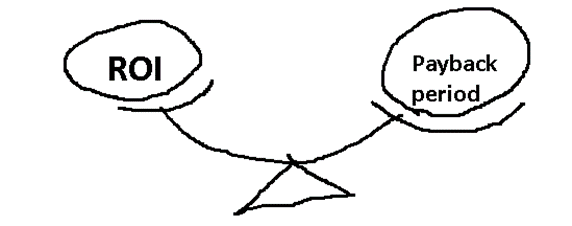
There are 2 things that decide the growth rate of investment: 1. ROI (return on investment) 2. the speed of investment collection. The combination of high ROI and shorter investment collection period is golden. If you find one, you can build a big pool in the backyard. Usually, these 2 things are in a trade-off situation. For example, an expensive bag sells very slowly because people don’t buy expensive bags as often, but ROI (calculated by return/investment) is high because of its high price.
These factors decide your growth. You can see this in a very simple model. For example, you purchase things and sell them, reinvest the cash to buy the things again, and repeat this process.
Example 1: ROI 20%, turnover 5 times a year. Each time you reinvest all the cash you got.
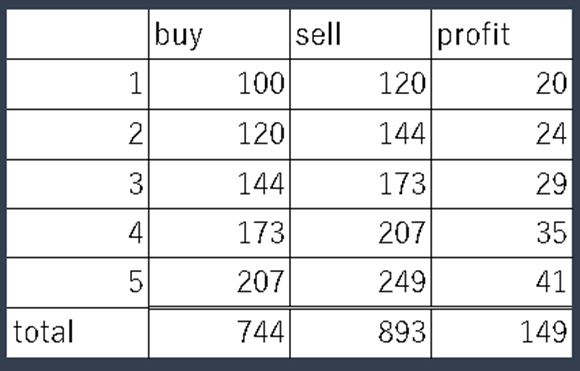
The result: The sales start with 100, grow by 20% each time five times in a row, and the sales grow to 249 (100*(1.2^5)) at the end. Total profit: 149, the accumulated ROI is 149% (profit of 149/initial investment of 100).
Example 2: ROI 100%, turnover only 1 time a year. Total sales is 100*2^1=200. Profit: 100.
In this case, more frequent turnover wins over high ROI.
In many cases, more frequent turnover wins too. For example, in a subscription business, you have to pay CAC (customer acquisition cost) to get customers. So CAC is the investment. Yearly payment is the way to collect the invested CAC faster, and this makes the investment collection period shorter. But you have to provide a discount or other benefits to get annual paying customers, which leads to lower ROI because of lower prices or more costs.
Even though the ROI gets lower, companies choose to get more annual payment customers because faster investment collection is more advantageous than higher ROI.
To make the best investment, compare multiple options every time. If one has both higher ROI and a shorter collection period, that is the no-brainer one to choose.
Maybe you think your investment is fixed. But actually it is not. For example, your employee is an investment. You can change their roles by educating them, or even fire them and hire new people who are better at things that bring the most cash flow.
Conclusion
To maximize revenue, you have to maximize cash flow, because only the compound effect brings growth. Be frugal, reinvest all, maximize cash flow, always try to find places to reinvest, and maximize growth.
But having a safeguard is also important. Accumulate cash for rainy days. The direct cause of bankruptcy is always cash shortage.