3 Disastrous Pricing Mistakes That Make SaaS Growth Impossible

A Million Dollar Mistake
These days, I was offering short cash flow consulting for free, and this dude booked me. So I researched his business thoroughly and prepared for the meeting beforehand. Then meeting time comes—I opened Zoom and waited… this jerk just stood me up! So I contacted him, but he just ghosted me.
And it was a great loss for him, not for me at all, since it’s a no-selling free consultation. Also, I identified 3 critical things that are blocking this company from getting cash for growth. If he doesn’t fix them, his business could get stuck in very low growth or possibly suffer from a cash shortage.
I don’t want readers to make the same mistakes, so I’ll explain what this company’s mistakes are and how to fix them. I didn’t meet him, and I’m using only publicly available information.
He had a chance to grow the company much faster, but ruined it by acting disrespectfully. But he still has a chance to save himself by reading this—though the possibility of this kind of person reading other people’s articles is very low.
Anyway, let’s dive into the critical mistakes.
1. Charging Too Low
The product is automatic lead generation. This product integrates many external APIs, including GPT-like AI. The AI searches databases like LinkedIn and similar platforms with AI-generated ICP descriptions, sends AI-personalized messages automatically, and brings you qualified leads.
This seems great. Then I saw the pricing—it has only 3 tiers: Basic, Pro, Enterprise at $30, $70, $200 each, flat prices per month. At $30, you can get 25,000 search volume. If it really works, it brings 20 qualified leads.
That is insanely cheap compared to what customers are supposed to get. For example, Google Ads charges at least $3 for a meaningful click. Suppose 10% of them become a lead, and they’re not even qualified. When you qualify the customers, only 30% meet your standard. So only 3% of clickers become a lead—it costs $100 for a qualified lead. 20 leads cost $2,000.
And this company is selling this for $30. This is ridiculously low. It’s so low that people doubt it actually works. The low price is possibly repelling people, leading to fewer purchases.
Cost Structure Will Eat Your Profit
This product uses many external APIs, and the cost of using them is variable costs. Variable costs increase as sales volume increases. On the other hand, fixed costs don’t. Like when you develop your SaaS product, writing all of the code yourself—this way, the only cost is the initial development costs. This cost doesn’t increase as sales volume increases.
Now compare the cost structures of two companies.
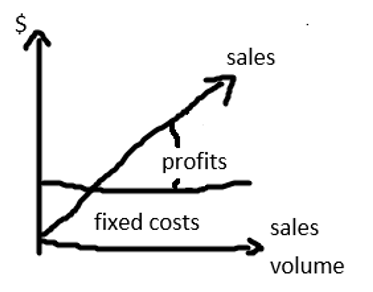
One company has only fixed costs. Sales exceeding fixed costs become profits. For example, fixed cost is $500, sales per product is $10, so if you sell 50, the sales become $500, and the profit is 0.
Any sales volume exceeding 50 will become a profit. So if you sell 60, you get a profit of $100.
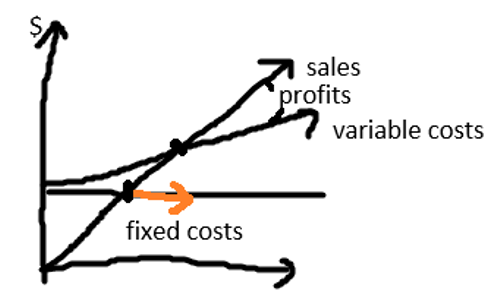
The other has fixed costs plus variable costs, so profit shrinks. For example, sales per product is $10, fixed cost is $500, plus variable cost per sale is $3. The gross profit per sale is $7 ($10 – $3). If you sell 60 of them, the loss is $80.
And it becomes more difficult to make it profitable—it requires more sales volume to get the profit. See the graph above? The break-even point moves to the right.
The second case’s break-even is selling 72 products. You have to sell 1.5 times more to make it profitable.
If a business’s costs are only fixed initial costs, even if you’re selling at a low price, you can make a profit someday. But with variable costs like API fees, pricing low will make this company easily loss-making.
Very little profit means you have very little cash to reinvest, so your business doesn’t grow. If your business is selling mainly to small businesses, churn must be high. You will reach a growth plateau where churn and new acquisition balance out.
But some SaaS founders are not comfortable with raising prices. They think a price hike can ruin their business. So they say “I will think about it,” but never do anything.
How to Sell High
Selling at $30, it’s difficult to find a paid ad channel. And this company’s gross profit is much less than that, since it has to use many APIs.
Reinvesting is very important to achieve compound growth for your company. Company growth is like compound interest—keep reinvesting the interest without cashing out, and the principal gets bigger each time. A company with only inbound marketing has difficulty finding places to put cash to generate more cash.
So that’s the reason you should charge higher: to have more options for reinvestment. As I said, the solution has $2,000 in value. Even if you sell it for $1,000, customers don’t churn. They get upset initially, but they get used to it—because you’re providing value higher than the price, and only you can provide that unique value.
You have to communicate how much value your product provides and make it seem reasonable compared to the value.
This company must have compared its price with its competitors like Apollo. The price of Apollo is around $50, so he thought he couldn’t charge more than that. But if you’re providing value that no other competitor can provide, you shouldn’t care about competitors’ pricing. Price should be compared to the value you provide, not to competitors’ price.
How to Test New Prices Without Driving Existing Customers Out
If you’re afraid of people churning, you can test it without affecting your existing customers.
There are 2 ways to do this.
You hold prices steady for current users. But experiment with higher prices for new ones.
1. Hide Your Price
Hide the price on your pricing page and put ‘contact us.’ This way, your existing customers can’t see the price. Then you publish ads or have sales reps sell at the test price. By hiding the price, you can avoid communicating with existing customers. Also, even if your new test price is very high, it doesn’t upset existing customers because they can’t see it. If you surprise existing customers, do it when you decide on the definitive price.
2. Tell Your Existing Customers You Are Now Testing New Prices
Tell your customers you will possibly change the price and put testing prices on your page. Then you actually put new prices and see the new incoming customers’ behavior.
You can choose either of those. By doing this, you can know how much potential customers will pay without driving customers out—by knowing how much they would pay before changing the price for everyone.
After testing that, you can test the price on the existing customers. Existing customers’ perception of product price and potential customers’ perception differ, so testing both sides will give you a better understanding of how much they’ll pay.
Read my price test article for more information. Pick the price that maximizes the cash flow.
You might be surprised to know that your customers and potential customers are willing to pay way more than what you’re charging now.
Customer Communication
When you decide to change the price, you must communicate the new price to existing customers beforehand—2 months to 1 month before the change. You send an email and put a notification on your site.
You tell them why you will charge higher. Say this price raise is as if for customers: “You can get better results by letting us charge more because we can provide better service and product.”
If your new price doesn’t work, you can always dial back to your previous price.
2. Pricing Display Is Very Bad
The company’s pricing is almost suicidal.
Why Is the Monthly Payment Default?
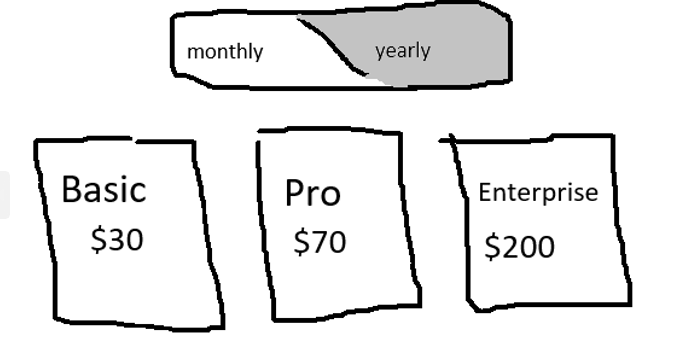
Why are you showing the monthly price by default? Potential users have to click the grayed-out yearly button to see yearly pricing. In this arrangement, potential users are more likely to choose monthly payment. You definitely want yearly payment users. Yearly payment is a cheat code for a SaaS business. It fastens your CAC collection, and you can reinvest the cash much faster, so that brings more compound growth.
Yearly payment should come first. And if they want to see monthly pricing, they have to click the monthly button. They see that the monthly fee is much more expensive than the yearly pricing.
Yearly Pricing Demonstration Is Very Regrettable
Also, the way you write the yearly payment price is very regrettable.
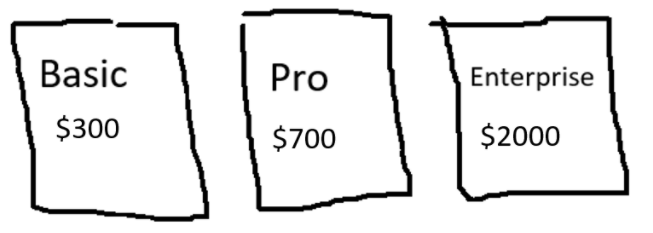
First of all, why do you put the full yearly price? Write the cost by month. In this case, not $300—write “$25/month (billed annually).” And also compare it to the monthly payment fee of $30, cut the price from $30 to $25. This way, users can easily see the benefit of yearly payment by comparison to monthly payment. And if they choose monthly, they will lose $5 a month. Sense of loss is what moves people.
Semrush has a good pricing page.
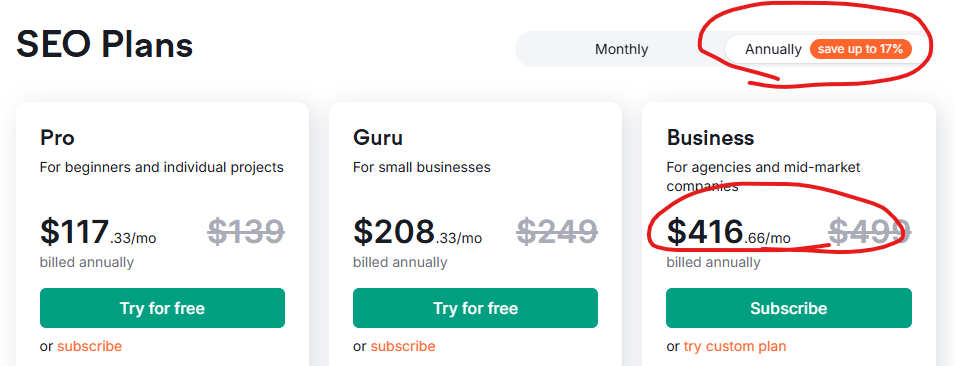
https://www.semrush.com/pricing
Annually is the default. Monthly is grayed out. And yearly payment shows the monthly cost (“billed annually” is written in small gray characters). The prices are easily compared because it shows the yearly price by month.
When you click the monthly pricing tab, you quickly realize you would lose the yearly payment discount by choosing monthly.
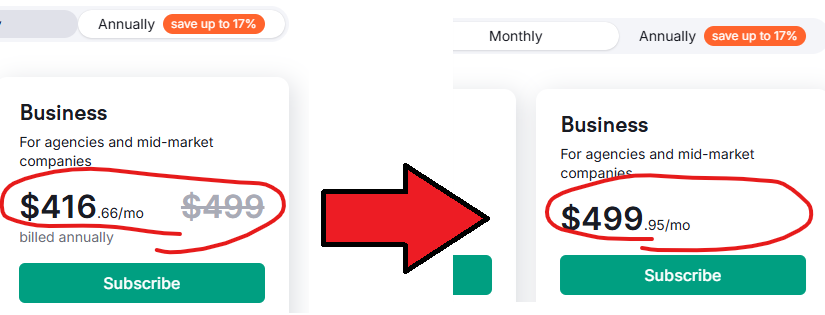
This is using the loss aversion tendency of human psychology.
Why Did You Pick Those Tier Names?
Also, I have to say something about your tier names. Basic, Pro, and Enterprise each charge $30, $70, $200? These are the worst tier names.
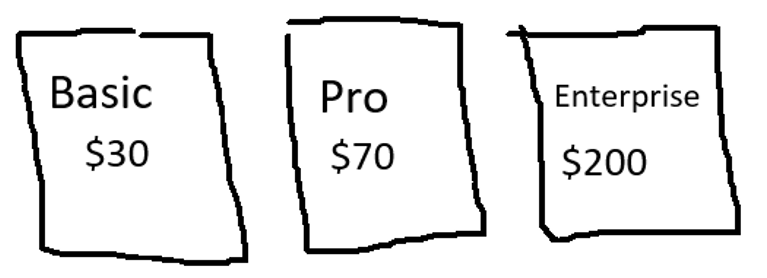
1. People will choose ‘Basic’ without thinking, because it sounds like the most “basic” tier. That is the lowest tier—the least favorite option for the product provider because it’s the cheapest.
2. ‘Enterprise’ is the name for the $200 tier. This is not a per-seat price. It’s a flat fee. And with that name, only enterprises choose this tier, so almost no users other than enterprises choose this. Also, it’s too cheap for enterprises. They will never buy a $200 service. Software security, reliability, and integration are essential to them. They think a $200 product will never provide those. If you’re really aiming for enterprises, you have to charge like $10k per user.
So it’s no way a tier for small to mid-sized business users, and real enterprises will never use this cheap service.
To fix these, I think Entry, Basic, and Business would fit better.
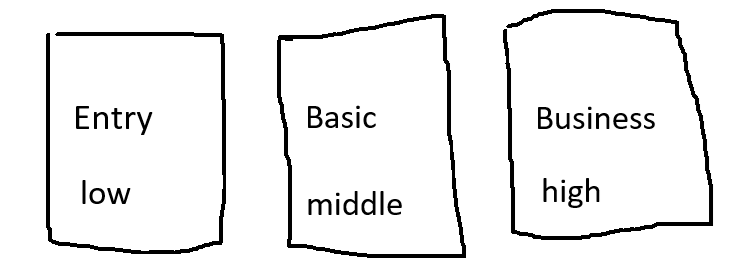
People tend to choose ‘Basic’ because it feels more standard. ‘Entry’ sounds too minimal, and they assume most people would go with ‘Basic’. And set ‘Business’ as the highest. This is the point. People in business choose ‘Business ‘ without thinking, because they are in a business. People often use the fast thinking brain, not the deep thinking brain. Take advantage of that.
Semrush uses this kind of naming structure. It has reasons for setting those names. They didn’t decide the names randomly.

Flat Fee Is the Recipe for Slow Growth
In the SaaS business, users churn. But what if they don’t churn? That must be like printing money.
Actually, you can achieve this by net negative churn. Negative churn means the sales from the same users this year are higher than last year. This is accomplished when people buy more than the previous year and it exceeds the amount of sales loss from customer churn.
Net negative churn is a must-have if you aim for bootstrapping hyper growth.
Imagine a company’s sales division uses your product, and they recommend it to the same company’s law division. And they too become a user, increasing seat number.
Or you charge as users use your service. Users get more and more value from using your product, so they keep increasing their usage of your product.
To accomplish this, you can’t set a flat price. You have to set a price that charges as the customer’s value metric increases.
The company seemed to have two value metrics: search volume and seat numbers. The software has both lead gen and CRM features. But in this case, users get more value as they get more leads. Lead volume grows with increased search volume.
So set an expandable price that increases as the volume increases. It charges $30 for 25,000 searches. This is ridiculous. Some people use only 3,000 searches, and some use 24,000—8 times more—and you charge the same price?
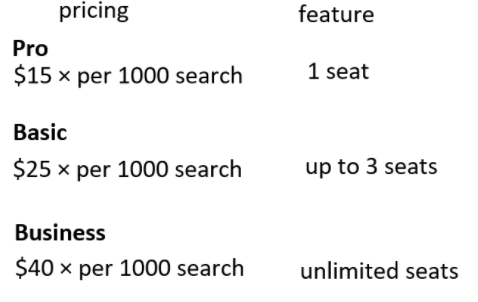
Price should be like this. They have to pay as they go. And higher tiers are more expensive per search, but they get more features.
This way, customers’ payment increases as they get more value from your service—both upgrading their tier and increasing usage.
This is a negative net churn generator. With only flat prices, users just brutally churn, and even replacing churned customers is difficult, let alone accomplishing growth. gets difficult, let alone accomplishing growth.
Last Words
Pricing decides whether you survive or not. Even if your product is genius, if you are bad at pricing, your company can’t survive.
Don’t set pricing randomly.