Quick Way to Unlock Jaw-dropping Cash From Your Business

Imagine you’re running a company with two divisions: Job A and Job B. Both bring in $100 in sales, but their profits tell a different story. Job A rakes in a healthy $40 profit, while Job B barely scrapes by with $5. Your first instinct might be to keep both running – after all, cutting Job B would slash your sales in half. Insane, right?
Wrong. Sometimes, the best move is to ax that underperforming division. Here’s why:
Job B might be making sales, but it’s likely a cash vampire. It’s sucking up resources in equipment, inventory, and human capital. By cutting it loose, you free up these resources for more profitable ventures. Cash is king, not sales numbers.
The Magic of Downsizing
Here’s what happens when you cut unprofitable business and reduce sales:
- Operating cash increases if CCC is positive. CCC stands for Cash Conversion Cycle, which is the time it takes for a company to convert its investments in inventory into cash from sales. This is the period from purchasing inventory to selling it and retrieving the sales cash.
Normally, CCC is positive, you first pay for the inventory and then get the cash from sales.
The following is an example. If yearly sales are 120 and CCC is 2 months, your paid cash for inventory is locked up for 2 months. That means last 2 months’ worth of sales cash is still not paid, that is 120 * 2 months/12 months = 20.
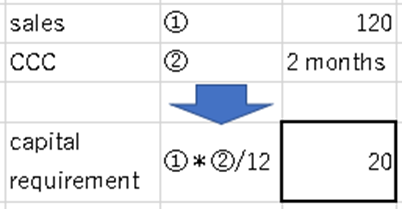
In this case, when you cut job B, you don’t have to keep putting that 20 in operation, the cash is released and you get the cash back.
- You no longer need fixed assets that were used for the unprofitable business (Job B). You can sell these assets and get cash, or use them for more profitable business. If Job B required escalating asset levels as sales increased, cutting Job B contributes to better cash flow.
For example, a rental car company, which has to buy cars before renting them, and needs significant upfront car investment every time sales increase, with investment increasing over time due to inflation or harsher competition to provide better services. This is a bad business.
- Employees: You don’t need employees who executed Job B anymore, so you can lay them off.
- Inventory for job B has gone, and write-down costs are reduced too.
- You can reduce the amount of debt that was used to provide capital for holding assets needed to execute Job B. By paying back and reducing this debt, you can also reduce interest costs.
The One-Time Cash Bonanza
By cutting low-profit or cash-hungry divisions, you’re not just stopping the bleeding – you’re setting yourself up for a significant one-time cash windfall that is freed from operations.
Reinvesting Wisely Here’s where it gets exciting. That newfound cash? It’s your ticket to real growth. But remember, we’re talking cash flow growth, not just sales. Your new investments should tick these boxes:
- Capital-Light: Choose ventures that don’t require much cash.
- High Margins: Prioritize businesses with better profit margins for more cash inflow.
The Turnaround
Ever wonder why struggling companies hire new CEOs, and often, their first move is closing unprofitable stores? It is freeing up cash by reducing sales. The trick is what happens next. If they just stop there, the business will slowly sink. The real magic happens when they reinvest that cash cleverly, creating a new growth curve and future cash flows.
You can’t reinvest “sales” or even “profit” – it’s just a concept. Cash, on the other hand, is real and powerful. Use it wisely, and watch your business transform from a cash-eater to a cash-generating machine.