Are Your Supplier Payment Terms Secretly Draining Your Cash?

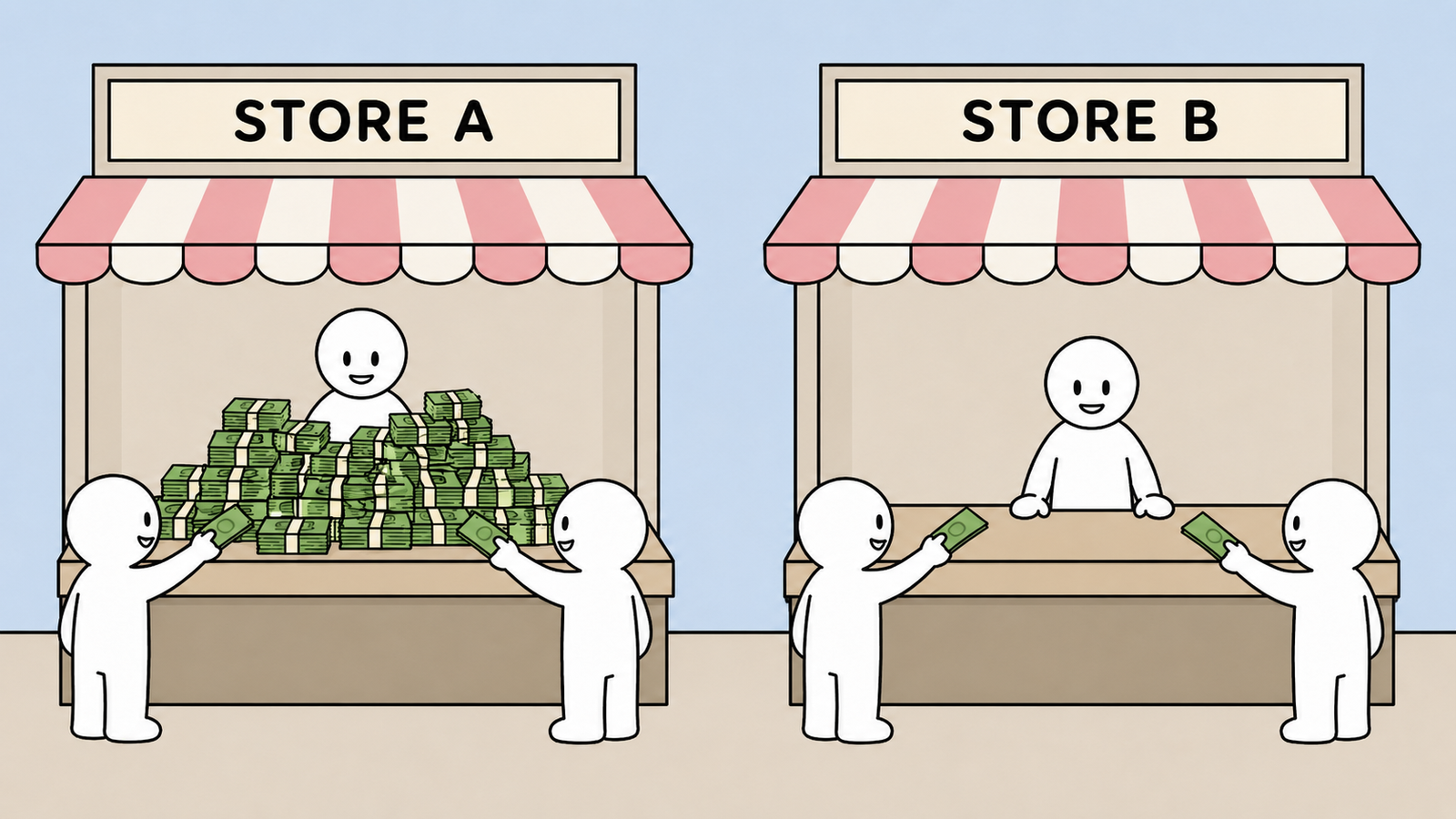
What is the Difference Between Cash-Rich and Cash-Poor?
Most business owners have a nagging feeling something is off. Revenue is coming in. But cash always feels tighter than it should.
So they chase more sales. More customers. More revenue. Assuming growth will fix the problem.
It won’t. Not if the real problem is sitting quietly in your supplier contracts.
A cash flow specialist CPA shows the most typical mistakes keeping businesses cash poor — and how to turn them around once you know what you’re looking at.
Payment terms are an interest-free loan
Payment terms are a loan. Free, interest-free, no approval required.
Net 60 means you pay 60 days after delivery. If you order $50K every month, you always have two months’ worth of unpaid invoices sitting in your account — $100K. That means you have $100K more cash than if you paid immediately.
But you’ll eventually pay that — so having $100K more cash for only 60 days doesn’t mean anything, right?
It does. That $100K never goes away. A new invoice arrives before the old one is due, so it just keeps rolling forward. Permanently.
Do this with multiple suppliers and you’ve raised serious working capital — no bank, no equity, no approval needed.
You’re Probably Leaving This on the Table
Every industry has a normal range for payment terms. If yours are shorter than the average, you’re paying earlier than you have to.
Here’s the uncomfortable truth: most payment terms get set on day one of a supplier relationship — and never touched again.
You were new. You had no leverage. You took whatever they offered.
But that was then. Since then, you’ve paid on time. Your orders have grown. You’ve become a reliable, valuable customer. Your leverage is completely different now — you just haven’t used it.
Industry average and your own buying power are the two things that should determine your terms. If both have shifted in your favor since that first deal, it’s time to have the conversation.
Push Too Far and You’ll Pay For It — Secretly or Openly
Some buyers treat payment terms as a pure power game: push for the longest terms possible, take the win.
This is a trap.
If you stretch terms well beyond industry norms without a compelling reason, experienced suppliers don’t just accept it. They recover the cost — sometimes explicitly on the invoice, sometimes buried where you’ll never find it.
Inflated hours. Rates quietly higher than what they charge other customers. Unit prices that creep upward without explanation.
You won’t see a line item called “financing charge.” But it’s there.
Here’s why. When you extend terms, your supplier is effectively lending you money. They shipped goods today; you won’t pay for 90 or 120 days. That has a real cost.
Suppliers who can’t absorb the wait often sell their receivables to a factoring company — handing over a $100,000 invoice in exchange for $90,000 today, just to keep their own cash moving.
You end up funding a 45.1% annualized interest rate, just disguised as the cost of goods.
Borrowing from a bank at 5–8% and paying your suppliers on normal terms is incomparably cheaper.
How to Get Longer Terms Without the Hidden Cost
The real move isn’t negotiation tactics. It’s item selection.
Focus ruthlessly on fast-selling items and cut the slow movers. This sounds like a merchandising decision. It’s actually the foundation of your entire supplier leverage.
1. Having fewer suppliers enables bigger orders
A tighter, faster-moving product range means you need fewer suppliers to cover it. Fewer suppliers means your purchasing concentrates — each supplier gets a bigger share of your total spend. That makes you important to them.
Fast movers also sell in volume, which enables larger orders per purchase. Both things together give you real leverage.
One warning: don’t buy more than you can sell in the near term. Inventory that sits ties up the very cash you’re trying to free. It gets marked down, sometimes written off — and the working capital you thought you gained disappears into dead stock.
2. Commit to long-term volume contracts
Because fast movers sell consistently, you can commit to a reliable order every month — something a supplier can actually plan their production and cash flow around.
An unpredictable buyer promising “roughly this much, maybe” is worth nothing to them. A buyer who shows up with the same order every month is worth extending terms for.
This only works for items with steady, predictable demand.
And watch the trend — a fast seller today might not be one in twelve months.
3. Share better demand forecasting
A tight, fast-moving range generates cleaner data. Fewer SKUs, higher velocity, more consistent patterns — your forecasts become genuinely accurate.
When you share that data with suppliers early, they hold less buffer stock, waste less, and run leaner. Their costs go down. That saving can come back as better terms, better prices, or both.
Cut the slow movers first. Everything else follows.
One Thing to Do After Reading This
Find the industry average payable terms for your sector. Compare it to what you have now.
That gap — if there is one — is money you’re leaving on the table every single month.
Payment terms are one place cash hides. A cash flow specialist CPA can find the others — and show you exactly how to fix them.
Book Your Free 10-min Session