4 Important Lessons from Netflix That Will Turn Your Cash-Troubled Business into a Private ATM

The Early Cash Crunch
Some business models are cash intensive, especially during rapid growth. Netflix’s journey from struggling DVD rental service to streaming giant offers crucial lessons on managing severe cash flow challenges – and how they could have done even better.
After the dot-com bubble burst in 2000, Netflix found itself cut off from VC funding. Their DVD-by-mail rental business demanded enormous cash outlays. To attract customers, they needed both a wide selection of titles and multiple copies of each to prevent “currently checked out” situations.
This model of paying upfront while collecting only monthly subscription fees created a cash flow nightmare. Despite making gross profits, their cash flow remained deep in the red. Growth actually worsened the problem – more users meant buying more DVDs first. With a month-long free trial, they’d only get paid a month later (or two months later if they charged at the end of the month).
The Costly Price of Growth
The cash crunch forced Netflix to rely heavily on VC funding from the start, significantly diluting share ownership. Marketing costs compounded the problem – they had to invest heavily upfront but could only recover that investment as subscription payments trickled in over months.
Netflix is now one of the biggest companies, and many tech founders have a huge net worth from their company shareholdings.
For example:

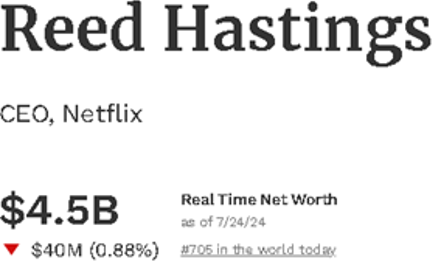
But founder-CEO Reed Hastings’ net worth is just $4.5B, which is equivalent to only 1.6% of Netflix’s valuation. In contrast, the founder of bootstrapped Mailchimp, a much smaller company, enjoys a higher net worth of $4.9B. This shows how cash flow management can dramatically impact a founder’s fortunes.
Consider the difference with SaaS (Software as a Service) companies like Slack. While their subscription model also delays revenue, they face minimal additional costs when adding new users. Netflix’s DVD model was far more challenging – they had to not only buy new titles but also purchase multiple copies of existing ones as their user base grew.
When VC funding dried up, Netflix faced significant difficulties. Their survival came down to two critical decisions.
1. Making Tough Personnel Choices
First, they had to make the painful choice of firing employees. Netflix had two types of staff: generalists who had been there since the beginning, and specialists hired more recently. While the generalists had contributed significantly to the company’s early success, they were no longer needed after the founding phase. No one wanted to fire these loyal employees, but the situation demanded it. The harsh reality was that a company that’s too nice can’t survive – if they don’t make tough decisions, they might end up having to fire everyone when bankruptcy hits.
2. Smart Distribution Innovation
Their second key move was figuring out how to achieve one-day shipment without massive capital investment. Instead of creating expensive, fully-stocked DVD warehouses across the US, Netflix developed a clever system of DVD exchange points. They realized most people only rented popular titles, and about 90% of DVD rentals were returned from other customers. By setting up exchange points, they could quickly resend just-returned DVDs to the next user in the region. This meant they only needed to ship niche titles from a central warehouse, avoiding the need for fully stocked facilities everywhere.
This strategy meant DVDs were constantly moving instead of sitting idle in warehouses. By avoiding unnecessary DVD purchases and large warehouse operations, Netflix managed to improve their cash flow while providing faster, better service to customers. This approach can work for other businesses too – if most of your sales come from a limited number of items that satisfy 90% of customer needs, you can cut slow-moving inventory to improve cash flow. The remaining 10% of niche requests can be handled through special orders without hurting customer satisfaction.
Missed Opportunities for Better Cash Flow
3. Leveraging Additional Revenue Streams
Netflix could have explored other solutions to improve their situation. They could have partnered with pizza or chicken wing delivery companies, sold advertising space in DVD cases for movie-related products, or pursued cross-selling opportunities. These additional revenue streams could have helped offset their huge initial costs.
4. The Power of Annual Subscriptions
Perhaps most significantly, Netflix could have adopted an annual subscription model. Getting paid the full year’s fee upfront could have transformed their cash flow position and helped them avoid the massive share dilution they experienced.
The math of annual subscription
Look at the table below. These are comparing the cash flow for a subscription-based company under two different payment models: monthly payments and annual prepayments.
If your sales increase rapidly, you better get paid with annual pre-payment.
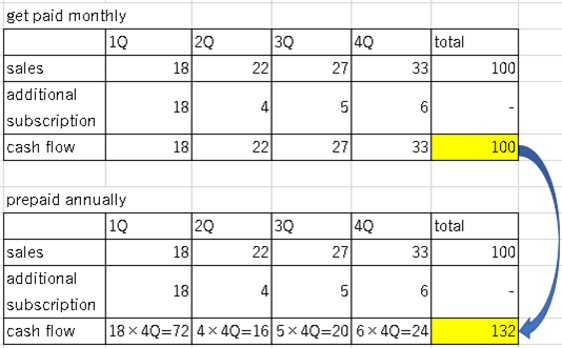
In the annual prepaid case, the company receives full-year payments upfront for new subscribers added each quarter. This results in a higher total cash flow (132 vs 100) even though the sales figures remain the same.
Then I show the effect of multi-years.
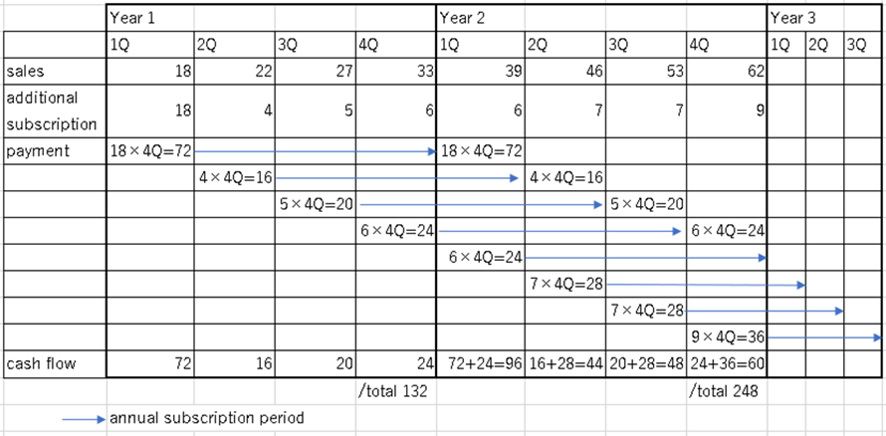
See? Second year sales are total 200 but cash inflow is 248. As subscribers increase the cash flow increases more.
To convince customers to choose annual subscriptions, a company has to offer huge benefits like these:
- Fast shipping privileges: provide priority shipping to annual subscribers
- Exclusive premium content
- Gifting customers their favorite old rental DVDs (this likely wouldn’t cost the rental company much since old DVDs are fully depreciated)
The key is to provide advantages that please customers without incurring significant additional costs.
Source: “That Will Never Work: The Birth of Netflix and the Amazing Life of an Idea” by Marc Randolph