This Is One of the Top Causes of Venture Business Death and How to Avoid It

Ever wondered why some promising startups crash and burn? Let’s talk about a big reason: low gross profit. It’s like a sneaky thief, slowly draining the life out of businesses.
What’s gross profit, you ask? It’s what’s left after you subtract the cost of sales from your revenue. Cost of sales is directly tied to making your product, while SGA (selling, general, and administrative expenses) covers everything else – like salaries, rent, and marketing.
Why does gross profit matter so much? Because when it’s low, reaching break-even becomes a real struggle.
Let’s break it down with a simple example: You’re selling a product for $100, and it costs you $80 to make. Your SGA is $1000 per month. To break even, you need to sell 50 units. Sounds doable, right?
But wait! You decide to cut your price by 10% to boost sales. Now, to break even, you need to sell 100 units – that’s a 100% increase! And trust me, selling twice as much is no picnic.
This is why low gross profit companies often end up in the red, eventually dying from cash shortages or drowning in debt before they can reach break-even.
It’s a common trap for businesses trying to compete on price alone, especially small companies going up against the big guys. Remember, if you’re small, you can’t win the price war. You’ve got to sell at a high price.
So, how do you justify higher prices? Use a Unique Selling Proposition (USP) and provide direct, unique solutions to your customers’ problems.
Let’s look at a real-world example: Li Auto, an EV company in China. While many EV startups are bleeding money, Li Auto, along with Tesla and BYD, managed to achieve high gross profit rates even when they were much smaller.
Check out these gross profit margins ((sales – cost of sales)/sales) for 2023:
- Li Auto: 21.5% (Great job!)
- BYD: 20.2% (Cool cars, cool margins)
- Tesla: 18.2% (Nice one, Elon)
- NIO: 5.5% (Ouch, that’s tight)
- XPeng: 1.4% (Houston, we have a problem)
- RIVIAN: -45.8% (Yikes!)
- LUCID: -225.2% (Is this even a business?)
You can often predict which companies will survive long before it becomes obvious to everyone else.
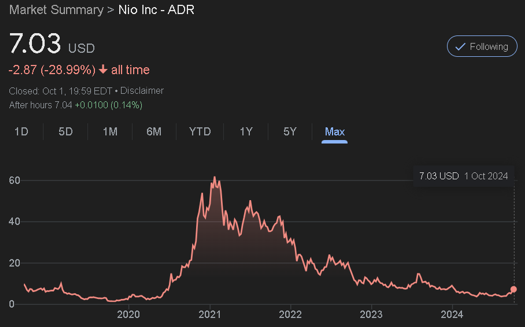
Source: Google
Take NIO, for example. Their low gross profit signals major difficulties in achieving profitability, which led to the company’s decline. If you’re an investor, spotting this early could help you exit before the stock takes a nosedive.
So, why can Li Auto maintain such a high gross profit? It’s all about their USP – providing a direct solution to a specific problem, allowing them to price their products higher.
Let’s break down Li Auto’s USP:
Target: Adventure-loving families who enjoy trips to rural areas.
Problem: Rural areas often lack EV chargers, causing “range anxiety” – the fear of running out of power in the middle of nowhere.
Conventional solution: Use a hybrid car like a Prius. But it doesn’t provide that cool, techy EV experience. Kinda boring, right?
Li’s solution: A car that runs primarily on electricity but has a gas engine as backup. It gives you the full EV experience (think semi-auto driving, voice recognition, fancy screens) without the stress of running out of juice.
By solving a real problem in a unique way, Li Auto can charge premium prices, maintain a healthy gross profit, and stay in the game. And that is how you avoid becoming another startup casualty!